
Namsay Phodrang
A Charming Retreat with Breathtaking Views of Wangdue Phodrang
Welcome to Namsay Phodrang, your tranquil escape in the heart of Wangdue Phodrang, Bhutan. Perched opposite the historic Wangdue Dzong, our hotel offers guests stunning panoramic views of the Dzong, Bajo town, Chimi Lhakhang, Nyenzer Lakhang, and Rinchengang Village. Whether you are here to explore Bhutan’s rich cultural heritage or simply unwind in serene surroundings, Namsay Phodrang provides the perfect setting for relaxation and discovery.
Our story is one of resilience and transformation. What was once intended as a family home was lovingly converted into a hotel after a fire changed its course. Today, Namsay Phodrang stands as a testament to our family’s dedication to sharing the beauty and tranquility of this special place with the world.
Our thoughtfully designed rooms offer a peaceful retreat for travelers. Each room blends traditional Bhutanese charm with modern comforts, creating a welcoming environment to unwind after a day of exploration.
At Namsay Phodrang, you’ll experience the warm hospitality of Bhutan in a setting that feels like home. Whether you’re watching the sunset over Wangdue Dzong or exploring the sacred Chimi Lhakhang, we invite you to discover Bhutan’s beauty and history from our family’s corner of the world.
We look forward to welcoming you and sharing our little slice of Bhutan with you.
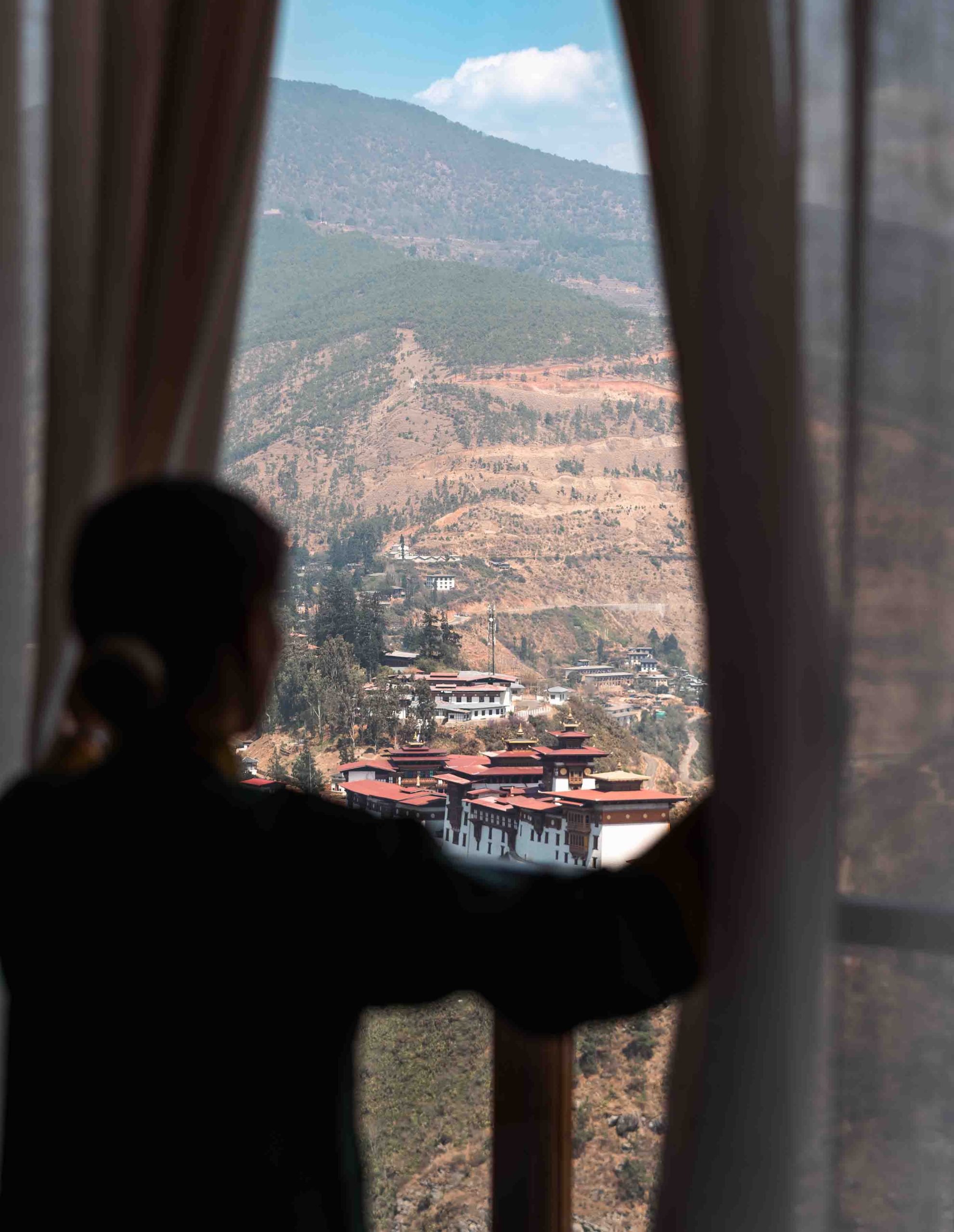
Wangdue Phodrang Dzongkhag: A Place of Heritage and Natural Beauty
Nestled between Trongsa and Punakha, Wangdue Phodrang is one of the largest districts in Bhutan. The first town you encounter after crossing the Punakha River and before venturing into central Bhutan, Wangdue Phodrang is often called the “final town in the west.” The district is dominated by the Wangdue Phodrang Dzong, which was established in 1638 by Zhabdrung Ngawang Namgyel. According to legend, Zhabdrung was in search of the perfect location for a dzong to protect against raids from the south. Upon discovering a tall ridge with sweeping views of the valleys below, he constructed the dzong and named it “Wangdue’s Palace” after meeting a young boy named Wangdue playing by the river.
Covering more than 4,000 square kilometers, the district’s climate is diverse, ranging from subtropical forests to snow-capped mountains. This varied landscape and rich biodiversity have led to the establishment of three national parks, as well as biological corridors that connect them. One of the most famous protected species is the Black-necked Crane, which migrates to Phobjikha Valley from Tibet during the winter months. To raise awareness and promote conservation of these endangered birds, Phobjikha hosts the annual Black-necked Crane Festival. Other wildlife found in the area includes red pandas, tigers, leopards, eagles, and herons.